

In the framework of the S+T+ARTS symposium held in Barcelona on October 30, 2024, HacTe organized a workshop on regional and European policy that addressed the present and future of transdisciplinary practices of experimentation, production and innovation. Moderated by journalist and analyst Gabriele Rosana, an expert in European policy, this dialogue between representatives of local and regional governments, cultural management professionals and academic researchers, aimed to exchange knowledge, experiences and results around projects that promote disciplinary and sectorial transversality, discuss public policies, and address the present and future of the S+T+ARTS initiative.
The first block focused on the challenges, lessons learned and successes acquired in the implementation during the last decade of transdisciplinary programs in different European territories. The need to build spaces for research, experimentation and production that question the traditional narratives on innovation and promote a differential European system was highlighted. The importance of rethinking the current paradigm of the innovation system through collaboration and integration of diverse perspectives to address contemporary challenges from a holistic perspective was also emphasized.
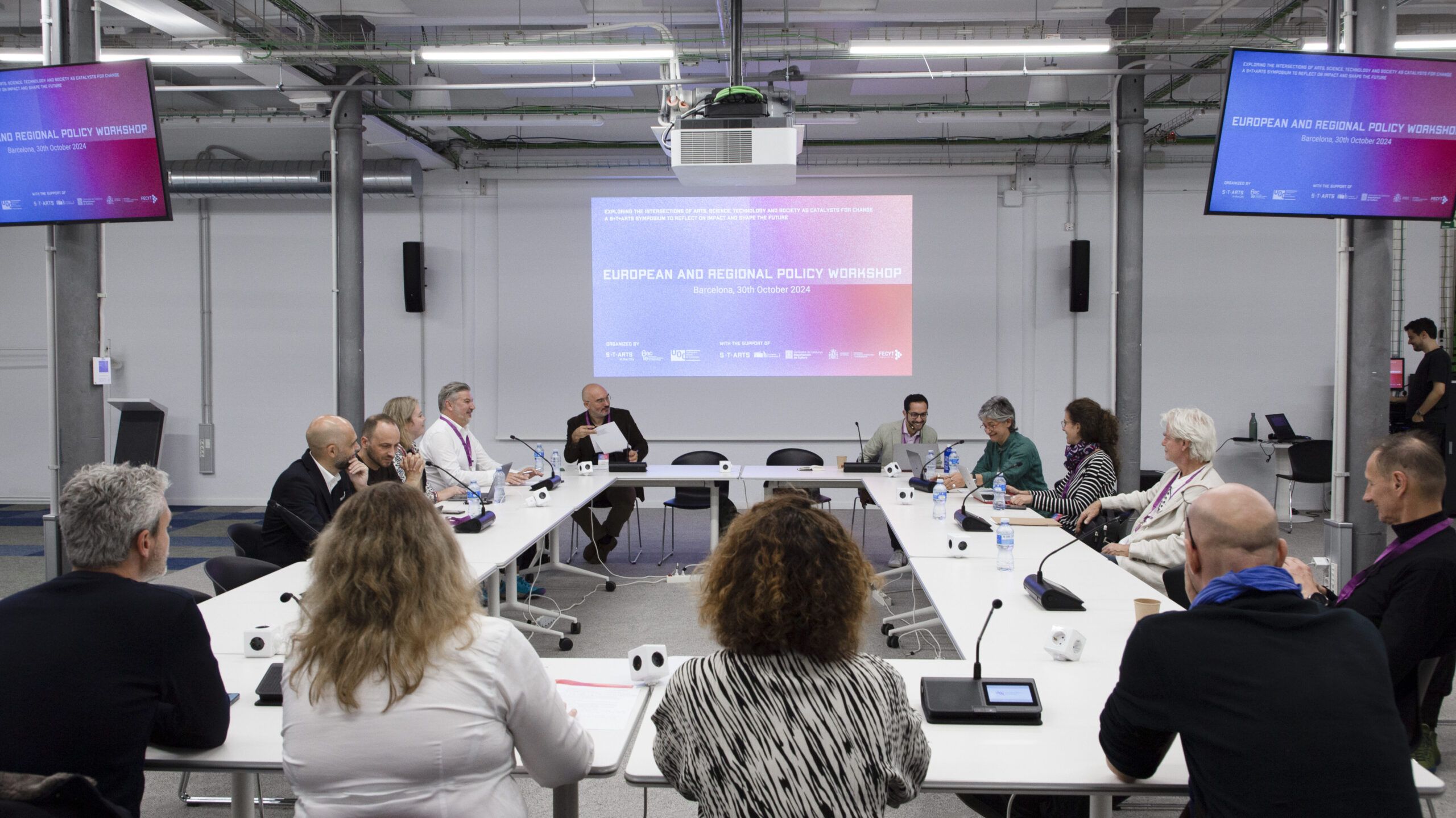
The second block dealt with the need to promote coordinated policies and cooperation between different administrative levels (local, regional and European) in the fields of education, science, technology and research. The potential of diverse and structured local ecosystems was highlighted, based on the experience of the S+T+ARTS Regional Centers, to strengthen the cross-cutting integration of policies. In addition, the need to overcome barriers and tensions that hinder the implementation of hybrid initiatives was highlighted, as well as the need to value the role of the arts as catalysts of diverse knowledge.
The last block focused on the future of the S+T+ARTS program, evaluating its evolution after a decade of existence and its role in future European funding frameworks. The discussion addressed strategies to ensure the continuity and integration of the initiative, reaffirming its relevance and uniqueness in the convergence between art, science and technology. All participants’ contributions highlighted the role that the initiative has played in the development of enabling environments for innovation, and the need to prioritize processual approaches, experimental and learning contexts over solutionist or exclusively end-product oriented initiatives. The need to build stronger networks and explore ways of integrating these perspectives with other European programs was another of the conclusions of this block.
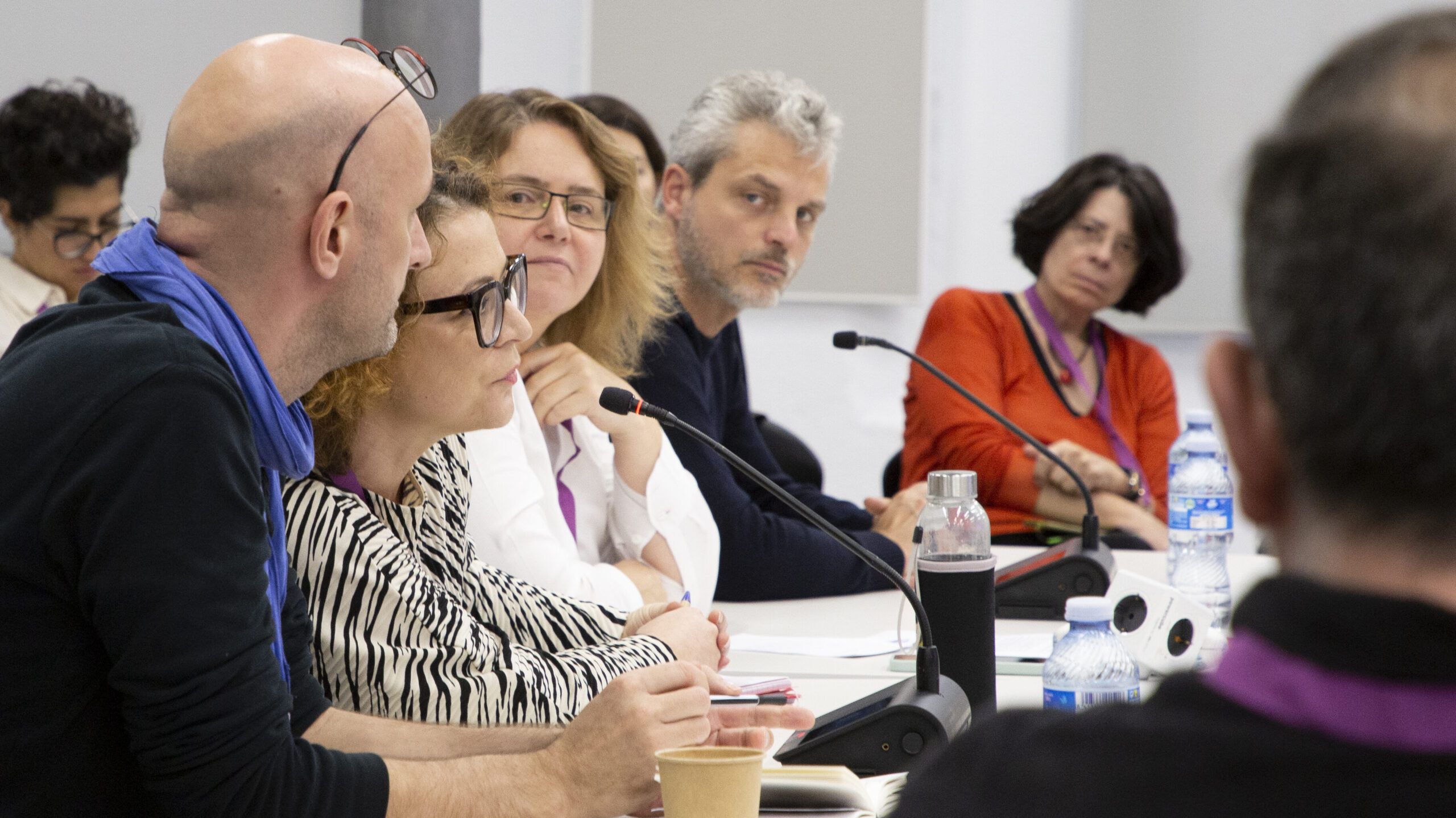
Workshop participants were: Gabriele Rosana, policy analyst; Marko Hren, head of the Slovenian Smart and Sustainable Specialization Strategy Unit (Ljubljana, Slovenia); Laia Arnal, director general of Knowledge Transfer and Knowledge Society of the Generalitat de Catalunya; Jurij Krpan, program director of the institute and president of the Slovenian National Committee for Culture; Miha Tursic, WAAG, Amsterdam; Evy Ceuleers, director of the Scientific Promotion Department of Innoviris (Brussels, Belgium); Marie-Carmen Bex, deputy director general of Innoviris (Brussels, Belgium); Christophe de Jaeger, GLUON; Ricardo Rego, councilor of the City Council of Viana do Castelo (Portugal); Luís Fernandes, artistic director of GNRation (Braga, Portugal); Veronika Liebl, managing director of Ars Electronica (Linz, Austria); Georg Russegger, director of the Center for Open Innovation at the Ludwig Boltzmann Institute (Vienna, Austria) ; Pau Alsina, member of the Executive Committee of ICUB; Katerina Benincasa, curator of art and science projects at the Joint Research Center of the European Commission; José Luis de Vicente, director of Design Hub Barcelona; Chris Salter, professor and director of the Immersive Art Space at the Zurich University of the Arts; Rita Sousa (INOVA+); María Araujo (INOVA+); Aurelie Delater (GLUON); Vicente Matallana (New Art Foundation); tere badia and Anna Pinotti (HacTe). The session included video messages from Diana Riba (vice-president of the CULT Commission of the European Parliament) and Marcos Ros Sempere (promoter and coordinator of the Friendship Group of the New European Bauhaus in the European Parliament and member of the REGI Commission).