

On Thursday evenings from May to June, as part of the Digital Impact exhibition at the Design Hub, HacTe programs more than a dozen free activities where art, science and technology merge. The Oasi space, a large dome designed by
The writer Jorge Carrión will kick off with a conversation where he will recount his stay with different research groups at the Polytechnic University of Catalonia. Based on this experience, Carrión has developed a vocabulary of scientific and technological concepts that set the agenda for a future that is already present, and which he will present accompanied by some of the researchers with whom he has shared his stay.
Among the first confirmed performances is the premiere of the project ‘Slowly Fading into Data’ by the digital artist Albert Barqué-Duran . An interactive action video game that combines “low technology” (with a retro 8-bit console) and high technology (using artificial intelligence and procedural sound design) and is the result of the ‘In Residence’ program at Pompeu Fabra University. Núria Nia and Citlali Hernández will present their performance ‘Òrbita 4’, which seeks to discover the formation of the language of a bot through a collaborative performance.

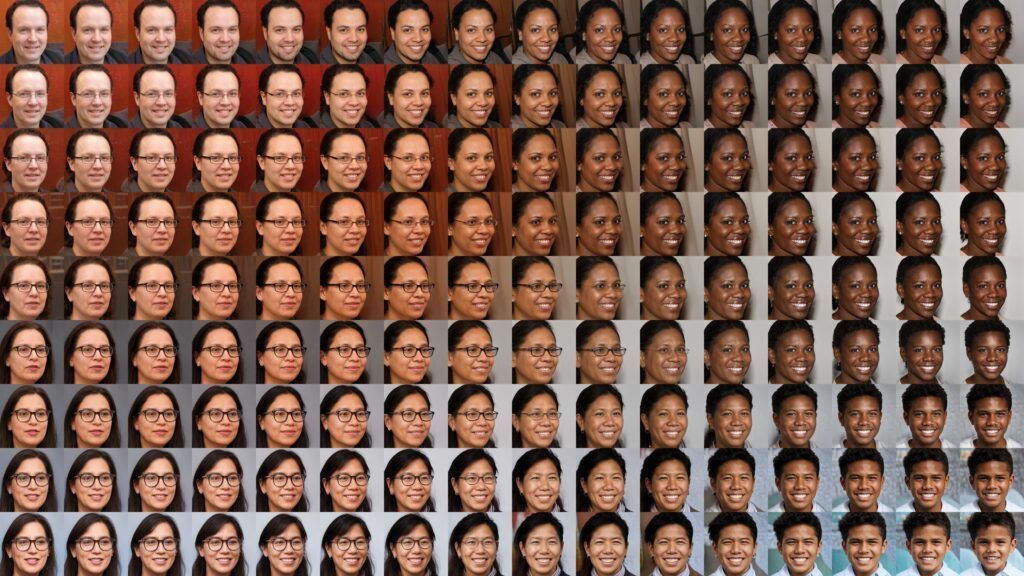
As for the talks, one of the highlights of the program will be that of the Australian artist STELARC, who will investigate the meaning of presence and absence in the digital world. The pioneer will question how we continuously slide between the offline and online worlds and how new technologies change our notions of corporeality. The Estampa collective will offer a participatory talk where it will reflect on and put into practice the creative possibilities and implications of deepfakes, an artificial intelligence technique that allows the production of videos of people -anonymous or known- talking or carrying out actions that have not happened.
Also noteworthy is the immersive talk by Eugenio Coccia, director of the Institute of High Energy Physics (IFAE), one of the centres that make up the Barcelona Institute of Science and Technology (BIST) community, who will explain the material properties of space-time and how physics investigates the universe with increasingly precise instruments. Likewise, Brígida Maestres, researcher at the CareNet (UOC) group, and Ángela Bonadies, visual and interdisciplinary artist, propose a talk accompanied by projections that want to investigate the silent impact of digital technology.
Along with these first activities, the full programme will be announced in the coming weeks, which will include new performances and talks, as well as collaborations with Catalan universities such as a presentation of projects by the UPC’s Centre for Image and Multimedia Technology (CITM) or the interdisciplinary research group DARTS at the Open University of Catalonia (UOC).