

Meetings in Barcelona as part of the S+T+ARTS Buen-TEK project
Microbiomes, jungles, spirits, archives, storms, machines, artificial intelligences and collective knowledge appear as constitutive agents of the world and bearers of a living, magical, ecological, historical and ancestral memory. From the storms that think, to the inflamed bodies of the global south and their affected microbiomes, to magic as counter-hegemonic technology and the performative practices of collective memory, the body emerges as an extension of disputed territories and, at the same time, the territories overflow as a sensitive prolongation of the body.
These practices are conceived as relational and symbiotic technologies: forms of situated knowledge that operate as strategies of resistance to material, epistemic and affective extractivism. In turn, technologies are reconfigured as fields of friction through water, clay and plants; sound artifacts and self-sampling experimentations of microbiota; fictional ontological frontiers, or immersive scenic contraptions from which experimental, ritual or biological technologies are deployed.
These meetings – over three days – are conceived as a crossing infrastructure that brings together in Barcelona the people and entities that have participated in four of the S+T+ARTS Buen-TEK residencies: Platohedro (Medellín, Colombia), CICTA (La Chimba, Ecuador), the High Performance Computing Center of the National University of Córdoba (Argentina) and LiquenLab (Punta Arenas, Chile).
Conceived as an experiential device, this is a space for the transfer of situated knowledge and dialogue between different ways of researching, creating and mediating. Its objective is to open the code of the methodologies used from listening, performativity and reciprocity between practices and knowledge of the different bodies, territories, technologies and agencies involved.
PROGRAM
Monday, April 13, 2026
Time: 14:30 to 16:30h
Online session from the Auditorium of the Barcelona Supercomputing Center through this form.
“Hybrid Research in S+T+ARTS Buen-TEK” is a session dedicated to learn about and discuss four research, experimentation and production projects developed within the framework of this initiative that has promoted hybrid practices between the arts, sciences, technologies and ancestral knowledge in different regions of South America. At this crossroads, the projects not only investigate, but also try out other ways of inhabiting, thinking and relating to the world.
14:30h Welcome and context
Tere Badia (HacTe) and Fernando Cucchietti (CSB)
14:40h “Hybrid research in S+T+ARTS Buen-TEK“
Presentation of projects and Q&A
OBLIVION. An exploration of collective memory through the body, dance, the living archive and technology from the testimonies of people who lived through the Cordobazo. Presented by: Javier Blanco (choreographer and stage director) and Fernando Cucchietti (BSC/UNC).
Magical counter-hegemony. An investigation around magical practices as counter-hegemonic technologies capable of repairing links between humans and non-humans. Presenters: Maria Adelaida Samper, Gabriel Zea (Aliens institute) and Alex Correa (Platohedro).
Turminta, what the storms know. A relational ontology from biotechnology, storms and vernacular knowledge of Kichwa communities in Ecuador. Presented by: Lorena Salas (visual anthropologist and cultural mediator) and Jenny Campues (Tránsito Amaguaña Intercultural Community Center).
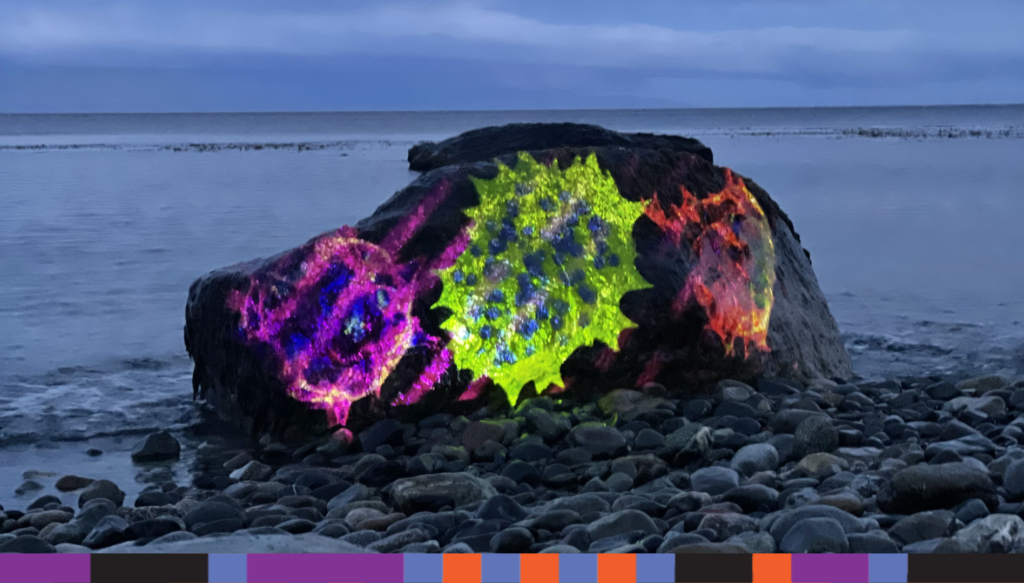
MicroBIOmatics. A riSomatic exercise on the active memory of microbiomes in and from the Global South. Presenters: Kinkinella (artist and researcher), Nataniel Álvarez and Sandra Ulloa (LiquenLab).
16:30 Closing
Tuesday, April 14, 2026
Time: 15 to 19:30h
Venue: Sala Ricson de Hangar | Centre de producció i recerca artística (Emilia Coranty 16. 08018 Barcelona)
15h “Exploring Sumak Kawsay (Buen Vivir) from its territory of origin“
Jenny Campues, CICTA
The Ayllu (community) of La Chimba, the work from CICTA and the memory of Tránsito Amaguaña, are part of the road traveled in this territory that embodies the Sumak Kawsay (Good Living) after a long process of community struggle to bring this concept to the Ecuadorian constitution. This intervention invites us to open a reflection on how to inhabit this encounter from another place.
15:30h Expanded Oblivion
Performative lecture by Javier Blanco
To remember is not to recover the past, but to intervene in it. Through the crossing between body, archive and technology, the piece activates memory as an unstable system that rewrites itself in real time and resists the structural oblivion produced by digital acceleration. Inspired by testimonies of people who lived through the Cordobazo, the military dictatorship and other social struggles in Argentina, the work shows that all memory is collective, conflictive and always in dispute.
4:30 pm “Atorar la obsolescencia encarnando la memoria“
A discussion led by Lucía Egaña, Jenny Campues, Fernando Cucchietti and Pablo Aránguiz.
With: Tito Cucchietti, Marina Monsonis, Tau Luna, Javier Blanco and Lorena Salas.
Body and territory are carriers of a living and systemic memory, and their deep listening is a practice of knowledge and care. In this conversation we explore how from communities, arts, sciences, technologies and resistance, we can activate the embodied memory of body-territories to create and sustain biological, ancestral and political archives.
18h Break
18:15h Turminta, what the storms know
Sound performance by Lorena Salas
The observation of the skies, the movement of clouds, the presence of the sun, the formation of cumulonimbus and the arrival, or absence, of the “agüitas” constitute the epistemological basis of this research. This knowledge is articulated from the principles of Sumak Kawsay and from the relationship between Hanan Pacha (the above, the clouds) and Uku Pacha (the below, the soils): as above, so below; in that transit the balance is maintained, between jungle, moors and oceans, between life.
A journey through sounds from field recordings in the Chimba Community, the Amazon and the Sea, collecting conversations, landscapes, sound diaries, data from an artisanal weather station, and the voices of storms as systems of water thought and relational intelligences between human and more-than-human bodies.
19:30 Closing
Wednesday, April 15, 2026
Time: 10:30 to 18:30h
Venue: Sala Ricson de Hangar | Centre de producció i recerca artística (Emilia Coranty 16. 08018 Barcelona)
10:30 a.m. “BACTERIOMANCE: deciphering the intimate whispers of our viscera“
Workshop by Kinkinella
We will create our own narrative with a mapping activity, an invitation to reflect on the invisible traces we leave on others and the unexpected connections of our bacterial communities.
12h Break
12:30h “Recetas para no indigestarse“
A discussion led by Nataniel Álvarez, Sandra Ulloa and Aniara Rodado
With: Lara Campos, Mafe Moscoso, Lucía Piedra, Ce Quimera, Kinkinella, Aliens institute and Alex Correa.
Decoding is an exercise that goes beyond opening the algorithm, it involves unraveling the narrative in which we build knowledge, territories, and communities, (re)knowing the dented traces, (re)focusing the gaze, adding invisible agencies and intuiting other possible ways. From the relational and communitarian, in this conversation we will talk about the interdependence between the forms of life and the systems that have been woven throughout the BuenTEK residencies: we will talk about the relational and the communitarian, about knowledge that mutates and migrates, about contamination, composting and overflow, and about how, with whom and with what we continue.
14h Lunch
15:30h “Ritual practices as technologies of reconciliation“
By Aliens Institute and Alex Correa
An activation around the magical counter-hegemony toolbox. An invitation to play and speculation through readings aloud, meditations, oracles and a collective dialogue around the ritualization of everyday life as a way of reconciliation between humans and non-humans. A space for ontological crossbreeding and metabolic reflections as opposed to extractivist societies.
18:30h Closing: mingling with beers
PARTICIPANTS
Aliens Institute is a collective formed by María Adelaida Samper and Gabriel Zea. They work from the fields of critical and horizontal pedagogies, experimenting with different ways of producing and disseminating knowledge that reconfigure pre-established categories and hierarchies, seeking to destabilize ideas and interpersonal relationships, using the hybridization of critical theory and subaltern knowledge.
Pablo Aránguiz-Mesías is an anthropologist with more than 25 years of experience in community research with and for the indigenous Williche people of the Chiloé archipelago in southern Chile, a trajectory that has incorporated intergenerational approaches to education, biocultural conservation, island studies, youth and governance.
tere badia has a degree in Art History and a master’s degree in Information and Knowledge Society from the IN3 (Internet Interdisciplinary Institute-UOC). From 2010 to 2017, she was director of Hangar, Center for artistic production and research in Barcelona. From 2018 to 2022, she held the position of secretary general of Culture Action Europe in Brussels. Since December 2024, she is director of HacTe, Hub for Art, Science and Technology in Barcelona.
Javier Blanco is a Colombian choreographer and stage director based in Berlin. His practice integrates contemporary dance, performance, theater and multidisciplinary arts, with research methodologies and emerging technologies. From a Latin American and intersectional perspective, he explores social, ecological and political dimensions, developing collaborative processes and experimental performative strategies in contemporary art.
Nataniel Álvarez is a visual artist and co-director of Liquenlab, a laboratory located in the Magallanes region of Chile. He has been dedicated to the development of art projects since 2003 and in 2004 co-founded the art collective Ultimaesperanza in the city of Punta Arenas. Since 2013, he has directed the LUMEN media arts meeting.
Lara Campos is a materials researcher, transdisciplinary artist and educator, driven by curiosity, alchemical processes and exploration of the territory. Currently resident of Hangar’s wetlab. She investigates bodies and techniques that ferment a transdisciplinary approach in the margins of art and science. She encourages the exchange of knowledge, generating situated and critical methodological tools to broaden the perspective of what we consider matter, waste, ecology and community, ritualizing the making-matter as a poetic and political practice.
Jenny Campues is coordinator of the Tránsito Amaguaña Intercultural Community Center in the community of La Chimba (Cayambe, Ecuador). She works in experiences that integrate education, art and science from the territory. It is part of this process, a space that keeps alive the history of Tránsito Amaguaña, to promote tourism as a tool for resistance, education and sustainability.
Alex Correa is a founding member and co-director of Platohedro, a collaborative creative platform based in Medellín. Since 2004 they have been dedicated to artistic creation and experimentation, the creation of communicative content, and ongoing research into free culture and alternative pedagogies. All these processes are guided by the search for the common good, guided by the philosophy of Good Living and Good Knowledge.
Fernando Cucchietti is a researcher at the Barcelona Supercomputing Center where he leads the Data Analytics and Visualization group. With a PhD in quantum computing, his current work focuses on the application of AI and visual techniques in industrial and urban challenges through the digital twin paradigm, and on the exploration of how collaboration between art and science can generate technological innovation and social benefit.
Tito Cucchietti is a retired businessman from Córdoba, Argentina, with a prolific social and political activity: founding member of Movimiento por un Sistema Integral de Salud (1982), member of Cooperativa La Tinta S. Coop. (1985), member of Partido Intransigente since the democratic opening in 1983, member of the presidential campaign of J.O. Bordón in the FREPASO alliance (1995), president and founder of the Córdoba section of the Nuevo Espacio party (1995), and management advisor in the Integral Health Care Program (PAMI) Córdoba during the national government of the Alianza (1999).
Lucía Egaña works as an artist, curator, writer, independent researcher and educator. She is interested in collaborative projects that problematize the construction of social imaginaries and sources of knowledge. He is interested in an art that overflows its own discipline, permeating areas such as technology, pedagogy, sexuality, activism, writing and ecology.
Kinkinella is an artist and researcher who has based her most recent practice on the exploration of abdominal pain, chronic inflammation and microbial destruction of her intestinal organ, which has pushed her towards the experience of self-management, microbial bioremediation, as well as the desire to rename things and break self-inflicted narrative circuits. Her work is always collective and corporeal, and is marked by territorial, social and emotional uprooting.
Tau Luna (Medellín, 1989) is a visual artist, researcher, manager, curator and teacher. From her transnobinariamigrante perspective she seeks to connect the shared migrant experience and memory with more-than-human migrant beings through ancestral, scientific and intuitive technologies. She is interested in stories of territorial displacement, anti-colonial resistance and care for life. This often involves learning to listen to humans, stones, soil, rust or birds. She develops cultural projects that articulate critical pedagogy, collaborative art and community work. Currently, she is a resident at La Escocesa and is part of the Selvagem cycle coordinated by Ailton Krenak, where she contributes with the translation of texts from Portuguese to Spanish.
Marina Monsonís writes and cooks from frustration, tension and the desire to transform, humbly, the ways of cooking, feeding and producing food and community for the last 20 years. She co-develops collective, community and pedagogical projects based on place, connecting art, politics, agroecology and cooking. She energizes the MACBA kitchen since 2018, inhabiting its tensions. She is the author of La cocina situada, illustrated by Carla Boserman (G. Gili, 2021), and Mare mar (Ara Llibres, 2024).
Mafe Moscoso is a writer, researcher and teacher. She experiments between/at/with the crossovers between fiction and ethnography. Among others, he has published KOTOPAXI, una fábula sci-fi equinoccial (SDKS Ediciones), La Santita ( Consonni), the essay Hostal España. The host gesture, the host ethnography. (Mr. Griffin), the poetry books Desintegrar el hechizo and Crónica Roja (La Reci). In 2023 he was awarded the Banco Sabadell/Hangar artistic research grant and in 2025 the research grant from the Center for Apocalyptic and Post-Apocalyptic Studies (CAPAS) at the University of Heidelberg.
Lucía Piedra (Havana, Cuba) is a researcher, independent curator and teacher. Her gaze reaches a geopolitical environment that links the Caribbean with the rest of America and Africa in its colonial relationship with Europe. In the specific case of Cuba, she is particularly interested in its link with the so-called Eastern Bloc. M.A by the UAB in Cultural Studies and Comparative Literature (2016-17) and M.A in Museology by the MACBA and UAB Studies Program (2014-15). Her practice addresses social grammars and narratives in relation to topographies of colonial thought, spaces of negotiation and spaces of jouissance. Practices that interrogate the present to modify the future and narratives that reorganize the counter-narrative.
Ce Quimera is an artist and researcher. She works with questions about bodies, identities and technosciences without losing sight of the commitment to collective knowledge. She develops projects linked to genealogies more than human, living technologies, oracles as scientific methods of research and speculative narratives in cuir ecosystems. She is part of Quimera Rosa, Pluriversidad Nómada and curates art/science projects from a transfeminist and anticolonial point of view. https://cequimera.xyz/
aniara rodado is a choreographer, artist and researcher whose work explores witchcraft and interspecific relations rooted in the plant world, from a transhackfeminist and countercolonial perspective. Her choreographic practice goes beyond dance and the human body to question the ecological crisis, techno-scientific fetishism and the hegemonic forces that standardize ways of life, bodies, alliances and knowledge.
Lorena Salas is a visual anthropologist, sociologist, filmmaker and cultural organizer. For over a decade, she has worked closely with Amazonian, rural and migrant communities, developing processes of self-representation and artistic co-creation as strategies of resistance to systemic violence, displacement and extractivism. Her creative and research interests explore the relationships between visuality, auditivity, sensitive ecologies and indigenous cosmologies.
Sandra Ulloa is a visual and media artist. She co-directs the collective Ultimaesperanza and the international meeting of contemporary art and new media LUMEN in the region of Magallanes. She is a member of Liquenlab, with which she develops curatorial work, workshops and laboratories that cross art, science and technology. Her work intervenes in southern territories through monumental projections and sound electro-embroidery based on the cartography of the Strait of Magellan, exploring local memories, colonization processes and ecological imaginaries.
S+T+ARTS Buen-TEK is a project articulated around a program of transdisciplinary residencies conceived to promote experimentation, knowledge exchange and collaboration between Europe and South America. Buen-TEK refers to the combination of the concepts of SumakKawsay (Good Living) and ancestral and contemporary technologies, exploring from mutual learning in the experimental crossing of arts, sciences, technologies and ancestral knowledge.
S+T+ARTS Buen-TEK is a collaboration between: Alta Tecnología Andina (Peru), Barcelona Supercomputing Center (Spain), Centro de Cómputo de Alto Desempeño de la Universidad de Córdoba (Argentina), Centro Intercultural Comunitario Tránsito Amaguaña (Ecuador), GLUON (Belgium), HacTe (Spain), IMPAKT (The Netherlands), Laboratório de Arte Ciência Oceânica Cátedra Unesco -Instituto Oceanográfico e Instituto de Estudos Avançados da USP (Brazil), LiquenLab (Chile), Más Arte Más Acción (Colombia), Museu do Amanhã (Brazil), Pivô (Brazil), Platohedro (Colombia), SONY CSL-Rome (Italy), TBA21 (Spain), Universidade de Fortaleza (Brazil).




